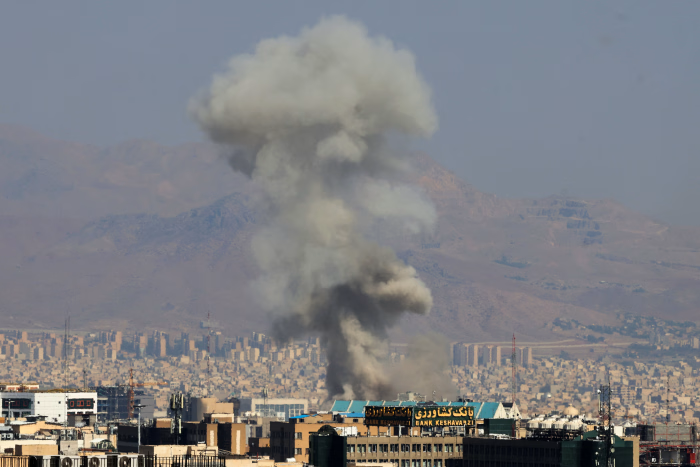
The ongoing direct conflict between Israel and Iran has intensified rapidly since June 13, 2025, when Israel launched a bold preemptive strike targeting Iran’s nuclear and military infrastructure. Dubbed Operation Rising Lion, the assault marked the most direct confrontation between the two longtime adversaries. Here’s a complete breakdown of the Israel–Iran War and the events that have unfolded since the operation began—covering military actions, retaliation, global reaction, and what might come next.
Background
Though Israel and Iran have clashed indirectly for years through regional proxies and cyberwarfare, the events of mid-June marked a dangerous turning point. Citing urgent intelligence on Iran’s nuclear enrichment progress, Israel launched a wide-scale, surprise airstrike campaign deep into Iranian territory. The goal: cripple Iran’s nuclear program and decapitate key military leadership before it could fully mobilize.
Timeline of The Israel–Iran War
June 13, 2025 – Operation Rising Lion Begins
In the early hours of June 13, Israeli forces launched a massive air assault, representing the launch of this Israel–Iran War, re targeting over 100 strategic sites across Iran. The strikes were focused on nuclear enrichment facilities in Natanz, Isfahan, and Fordow, missile storage sites in Kermanshah, and various IRGC command centers. Reports suggest that over 200 aircraft were involved, supported by drones, cyber tools, and electronic warfare.
Mossad reportedly played a role in sabotaging Iran’s air defenses beforehand, allowing Israeli aircraft to operate with minimal resistance. Among those killed were top IRGC commanders and several prominent nuclear scientists. The world woke up to a vastly destabilized Middle East.
Prime Minister Benjamin Netanyahu confirmed the operation in a televised address, saying the campaign would continue “as long as necessary to eliminate the nuclear threat from Iran.”
June 14, 2025 – Retaliation Begins
Iran responded within 24 hours with a barrage of missiles and drones aimed at Tel Aviv, Haifa, and other cities in Israel. While the Iron Dome and allied U.S. systems intercepted many of the projectiles, several did strike populated areas, causing casualties and widespread fear.
At the same time, Israel intensified its attacks, hitting oil depots, military bases, and radar installations throughout Iran. Footage from Tehran showed burning buildings, long lines for fuel, and civilians evacuating the capital in panic.
The International Atomic Energy Agency (IAEA) issued an urgent statement about possible radioactive contamination at Natanz, adding global alarm to an already dire situation and fears of the Israel-Iran War growing more intense.
June 15, 2025 – The Conflict Deepens
On Day 3, Israeli jets returned to the skies, targeting two key oil refineries and further degrading Iran’s air defenses. Meanwhile, Iranian missile strikes continued, leading to power outages and infrastructure damage in parts of northern Israel.
Civil unrest broke out in Tehran and other cities. The Iranian government began restricting internet access and urging civilians near military zones to evacuate. At this stage, over 200 Iranians and dozens of Israelis were confirmed dead, with the number expected to rise.
The United States formally condemned Iran’s missile attacks and pledged continued defensive support to Israel, dispatching naval assets closer to the region and providing air defense support.
June 16, 2025 – Day 4 and Counting
By the fourth day, the war had caused thousands of civilian evacuations in Iran. Hospitals were overwhelmed, fuel was scarce, and martial law was declared in several provinces. Israel continued striking suspected nuclear support facilities and missile caches in central and southern Iran.
Iran threatened “wider consequences” if Israel persisted. Though Iran has avoided directly targeting U.S. forces, several allied militias in Iraq and Syria have reportedly begun mobilizing.
Israel maintains that the operation is defensive and aimed solely at ending the nuclear threat. Netanyahu, in a second address, vowed to press on until “Iran can never again threaten Israel’s existence.”
Who’s Involved in the Israel-Iran War
- Israel Defense Forces (IDF): Leading coordinated air, cyber, and electronic strikes across Iran.
- Mossad: Conducted pre-operation sabotage and intelligence missions, reportedly neutralizing air defenses in key regions.
- Iran’s Revolutionary Guard (IRGC): Central target of the strikes, with key commanders killed and several bases disabled.
- United States: Providing logistical and air defense support to Israel, though not directly involved in offensive action.
Human and Strategic Impact
- Casualties: Estimated 250+ dead across both countries; hundreds injured. Many deaths occurred in Tehran following strikes on high-value targets.
- Infrastructure: Multiple nuclear sites, command centers, and energy infrastructure severely damaged in Iran. Israeli cities sustained limited but symbolic damage.
- Civilian Displacement: Tens of thousands have fled Iranian cities amid rising fears of additional strikes or nuclear fallout.
- Nuclear Program: Reports from the IAEA suggest that Iran’s enrichment activities have been severely disrupted—but concerns over radioactive exposure remain.
Global Reaction
- United Nations: Called for an emergency session to address escalation and potential violations of international law.
- U.S. Government: President Trump warned Iran not to attack American assets and voiced “full support” for Israel’s right to defend itself.
- European Union: Called for a ceasefire and a return to diplomacy but has largely remained neutral.
- Russia & China: Condemned the Israeli strikes, warning against further destabilization in the region.
- Oil Markets: Brent crude spiked to $105/barrel as fears of the Israel-Iran War turning into a wider regional conflict that will disrupt energy markets.
What’s Next?
This is a live and evolving crisis. While Israel claims the operation is surgical and finite, Iran appears to be preparing for a prolonged campaign of retaliation. Diplomatic channels have stalled, especially after Iran withdrew from ongoing nuclear talks in Oman.
Possible developments in the coming days include:
- Expanded Iranian retaliation, possibly through proxy militias.
- Increased civilian evacuations in both Iran and Israel.
- Greater U.S. involvement if American troops or allies are targeted.
- Regional spillover, particularly if Hezbollah or Houthis become active participants.
Final Thoughts
The Israel-Iran War has escalated into a full-scale conflict with significant human, political, and economic consequences. What began as a preemptive strike against nuclear threats has now evolved into the most dangerous Israel–Iran confrontation in history. With diplomacy on pause and military operations ongoing, the coming days will be critical in determining whether this becomes a broader regional war—or whether international intervention can pull both sides back from the brink.
Keep up with live updates on the Israel-Iran War from NBC News and make sure to subscribe to the Daily Ranters Newsletter.


Leave a Reply